Beer Braised Duck

Beer braised duck recipe (pi jiu ya)

Legend has it that beer braised duck (also known as beer duck stew) was invented by the Qing dynasty emperor Kangxi. The story goes that he accidentally knocked his sorghum wine into a duck stew, and found that it improved the taste of the dish. Nowadays, the recipe usually uses Tsingtao beer, but most beers work, so you can test it out with your favourite.

In this version, I’m using Lowland Glen from the Harviestoun Brewery because the description mentioned a fruity finish with malty undertones. In the past, I’ve also used Guinness, which gave the duck a heavier taste.

The following recipe will give you quite a spicy version of the dish, so if you prefer a more lightly spiced version, I’d strongly suggest halving the chilli, peppercorns and fennel.

The cooking time is 50 mins (although prep time is super short), and this recipe serves 2. It’s really easy to make – as you can see, there are fewer steps than usual. Ideally, use a wok when you cook this.
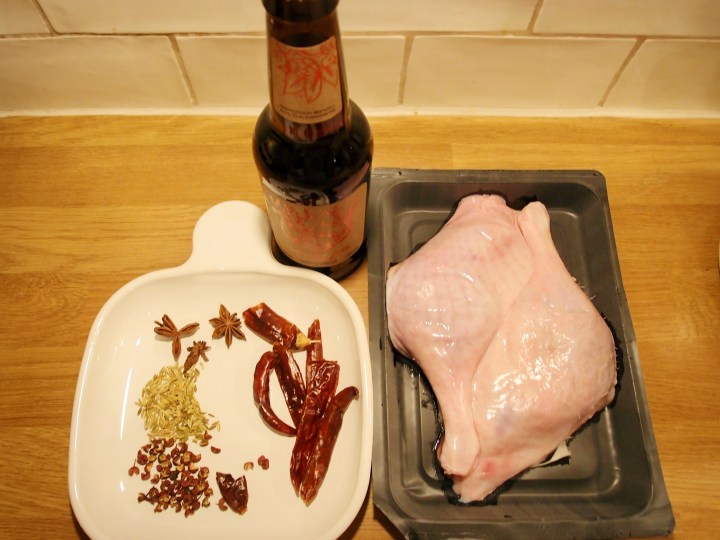
Beer Braised Duck

Ingredients
2 duck legs or 1/4 duck
2 star anise
1/2 tsp of fennel seeds
1/2 tsp of Sichuan peppercorns
5-6 dried chilli
1 tbsp of soya sauce
1 bottle of beer (around 330ml)
1 baby spring onion

Oil for frying, and salt to taste. Continue reading “Beer braised duck recipe (pi jiu ya)”

tea_flavoured_eggs

Tea flavoured eggs recipe (cha ye dan) – a snack from China

Happy 2016! Let’s kick off the new year with a recipe for tea flavoured eggs: a common snack in China, lightly salted and fragranced with black tea. You can either use black tea leaves or tea bags such as these Twining black tea varieties. Assam works quite well and gives the eggs a nice flavour. Please don’t use green tea, as the flavours won’t feel balanced.

I’m using tea bags in this recipe, as I needed to use decaf tea. Otherwise, this is a quite strongly flavoured version of the recipe, as I prefer a stronger taste for the eggs.

Despite the long cooking time for this recipe (around 1 hour then soaking overnight), it’s actually very simple to prepare. The eggs will keep for 3 days if refrigerated, so you can cook a larger batch if you prefer.

tea_flavoured_eggs

Ingredients
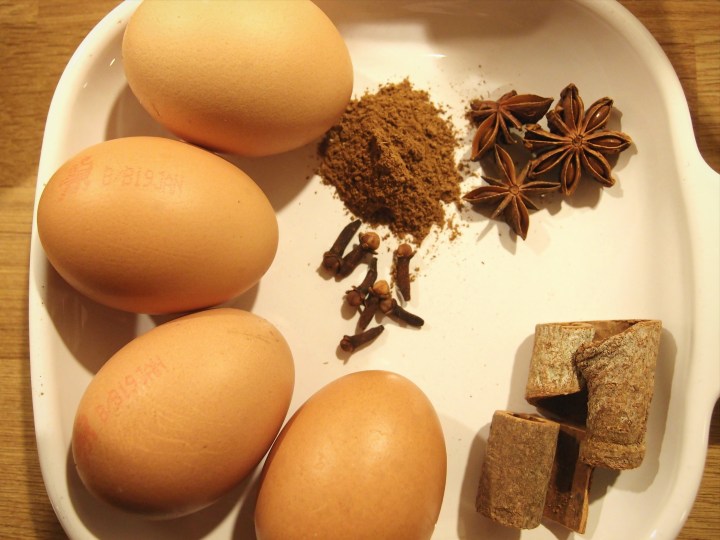
4 eggs
3 tea bags
3 star anise
6-7 cloves
2 sprigs of cinnamon (I’m using the Chinese version here)
1 heaped tablespoon of five spices powder
1 tablespoon of soya sauce
Salt to taste Continue reading “Tea flavoured eggs recipe (cha ye dan) – a snack from China”

Shredded pork and coriander

Shredded pork and coriander recipe (xiang cai chao rou si)

This simple and quick pork and coriander stir-fry dish comes from Northern China, just south of Beijing – from Shandong – and is part of the Lu cuisine (which is why it’s not a stew this time!)

Sometimes it has been modified to a spicier dish (by adding chilli), but the original version only uses salt, soya sauce, cooking alcohol, ginger and spring onion for flavouring. My family never made it with chilli peppers, so this is what you’ll find here.

The best cut of pork for this stir-fry is the fillet (aka the tenderloins). The cheapest pork I found during my shopping trip was already cubed, so that’s what I’m using. To make up for the cut, I’m cutting these into smaller pieces here. The aim is for it to cook very rapidly, so the prep time is roughly 10 minutes, but it should only cook for around 5-6 minutes.

This version of the recipe serves 2.

Shredded pork and coriander

Ingredients
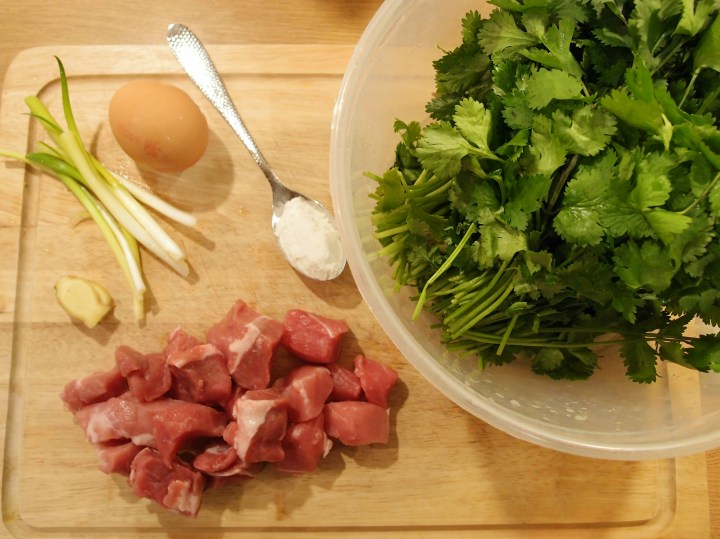
200g of pork
1 egg
1 tbsp of plain flour
4-5 spring onions (small)
2 slices of ginger
1 tbsp of soya sauce
1 tbsp of Shaoxing rice wine
200g of coriander
Salt to taste
2-3 drops of sesame oil

Yes, that’s not a typo, you really do need 200g of coriander! Continue reading “Shredded pork and coriander recipe (xiang cai chao rou si)”

Imitated_crab_Sai_Pang_Xie

Imitated crab (sai pang xie) – an imperial recipe from Beijing

There’s a story behind this imitated crab (sai pang xie) recipe, and it starts with the Empress Dowager Cixi craving crabs. Unfortunately, being based in Beijing means a lack of fresh crabs, so the imperial chefs found a clever way to cook eggs to make them taste as good as crab meat. I love this recipe because you can make a huge quantity of the “crab” without breaking the bank – and the bonus is that there’s no need to get fiddly with crab shells!

There are many variations of the recipe, starting with the poor-man’s version with just eggs. Others use white fish and a touch of prawns to achieve a texture closest to crab meat. I’ve used only prawns here, as I prefer that more seafood-y taste.

I’ve also used a salted egg, as this adds a little extra punch to the recipe, but you can use normal eggs. If you’re using normal eggs, then make sure you add more salt in the egg white and egg yolk mixes.

Lastly, this version separates the egg white and egg yolk to create two parts with different textures. The egg white is the crab meat, and the egg yolk is the crab yolk. The most basic form of this recipe doesn’t bother with separating the two, but I really think that this step makes a huge difference to how good it tastes, so it’s not worth skimping on that.

The version below serves 2, and takes roughly 30 minutes to cook. Most of it is time spent chopping the prawns though!

Ingredients
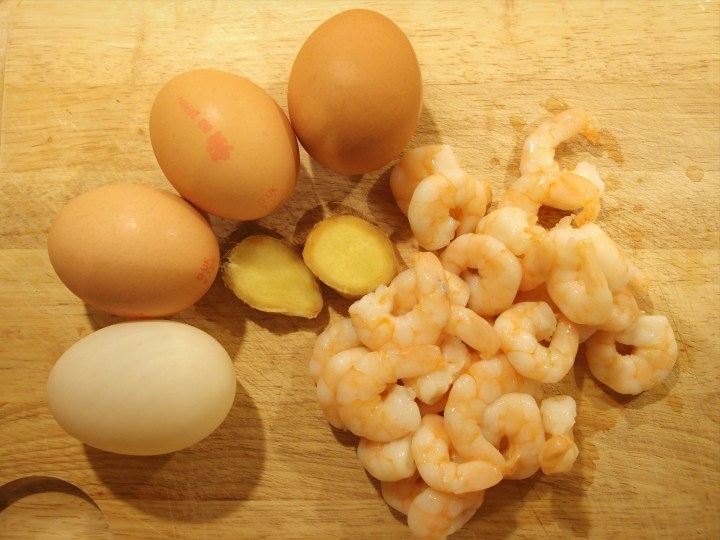
4 eggs (optional: 1 of the eggs can be a salted egg)
2 thick slices of ginger (roughly 3mm and 5mm thick each)
90g of prawns (alternatively, use 70g of white fish and 5-6 prawns)
2 tbsps of Chinese rice vinegar (you need the dark coloured vinegar)
Optional: 1 tbsp of Chinese shaoxing cooking wine

You’ll also need salt to sprinkle into the egg mixes and olive oil for the pan.

Imitated_crab_Sai_Pang_Xie Continue reading “Imitated crab (sai pang xie) – an imperial recipe from Beijing”

Pork_belly_sauerkraut_stew

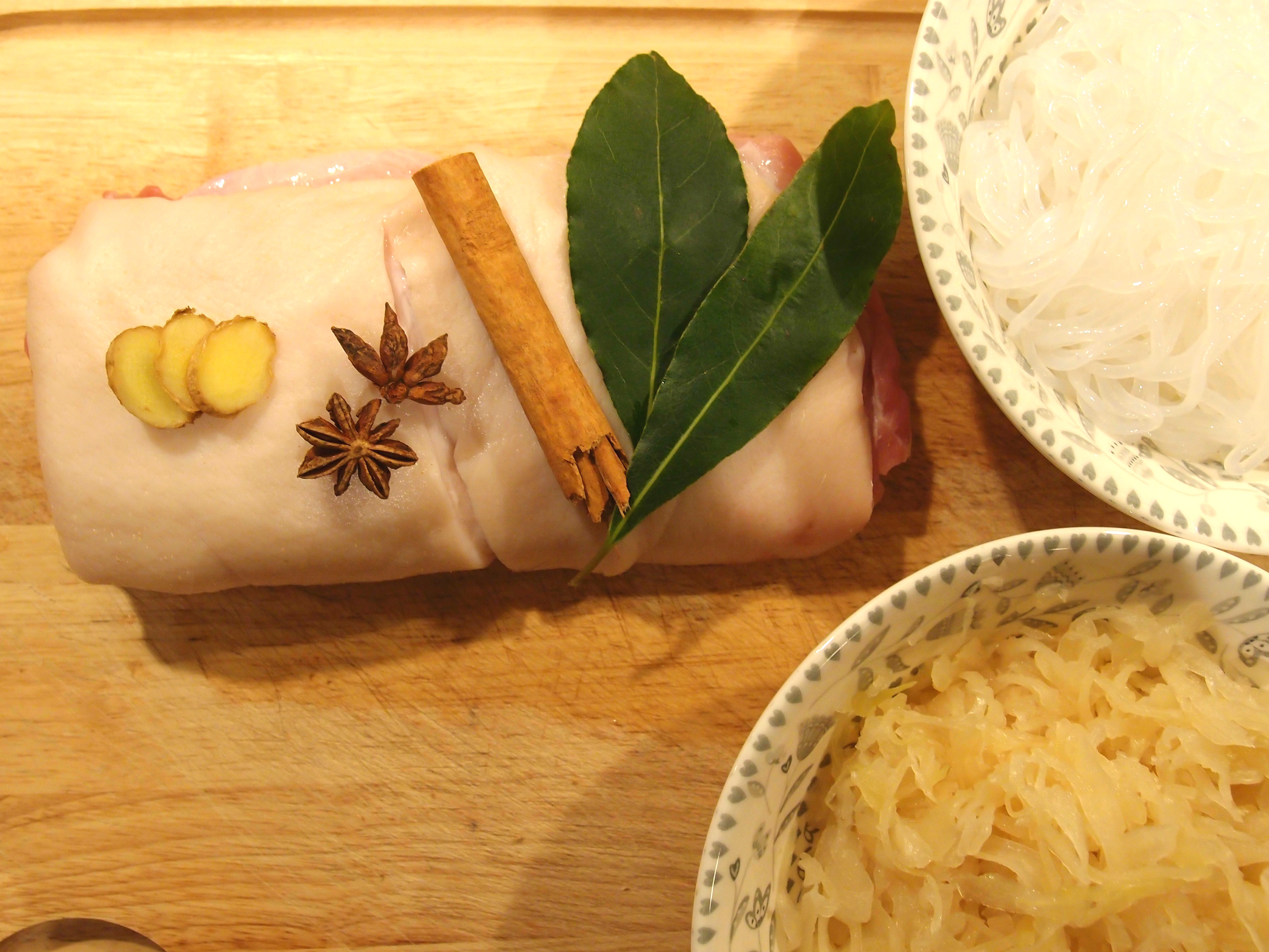
Pork belly and sauerkraut stew – a modern take on a traditional Chinese recipe

The pork belly and Chinese sour cabbage stew is one of my favourite dishes from China’s Dongbei cuisine, but sadly it’s extremely difficult to get hold of Dongbei-style sour cabbage outside China (the type from Southern China tastes very different). In order to make your own through my grandmother’s traditional recipe, you need to make a really massive batch, and I don’t cook with it enough to make that a realistic option.

Luckily, sauerkraut tastes a lot like it, and although it’s not 100% to the traditional taste, you can get the same balance of the refreshing sour taste of the sour cabbage and the rich and juicy pork belly from this recipe.

Also, to note, I’ve used the method where you cook the uncut pork belly first. You can also slice the pork belly into strips when the pork is raw (if it’s too soft to cut easily, just put it in the freezer briefly until it’s easier to cut). However, directly cooking the sliced pork belly gives you a greasier dish in the end, so I prefer cooking it the longer way.

Traditionally, you’d use a vermicelli made from yam for the stew (it has to be the thicker variety), but here, as pork belly is quite a fatty food, I’ve swapped it out for Shirataki noodles. These are super low calorie and are made from konjac yam, so taste identical to the traditional ones in the stew. If you can’t get hold of these, then you can replace it with a thick noodle or even leave it out completely.

shirataki_noodles

The recipe below serves 2-3, and takes roughly 40 mins to cook. As you’ll see below, the ingredients are also a bit rough for this, because in Chinese stews, you can vary the amount of meat or noodles and it will still come out well.

Ingredients
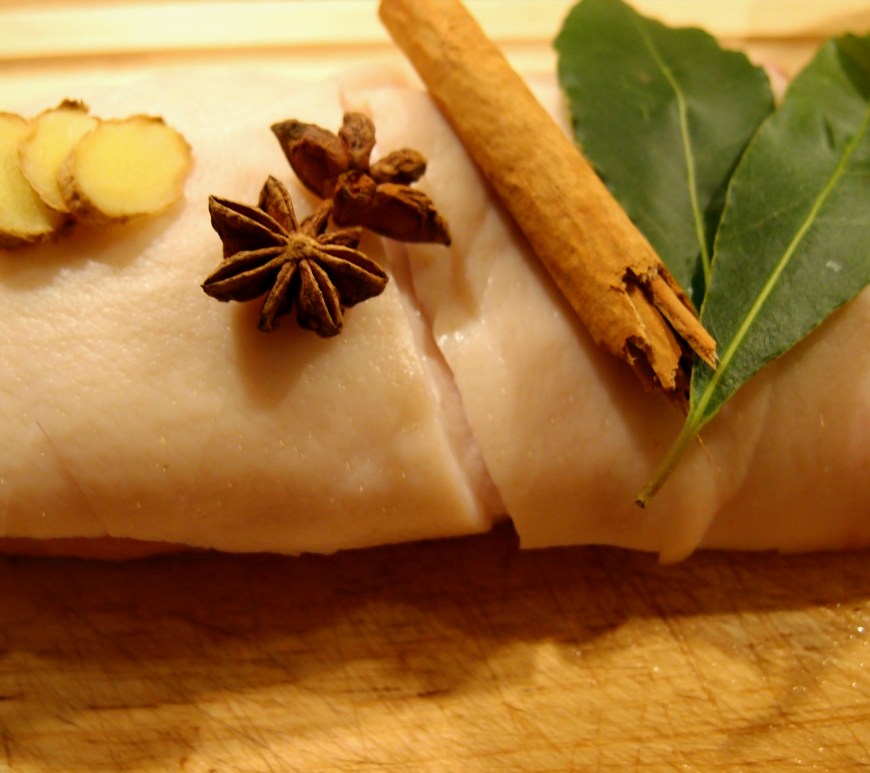
1 strip pork belly/pork belly joint (roughly 400-500g – I used 430g)
1/2 stick cinnamon
2 bay leaves (ideally fresh)
2 star anise
3 slices ginger
200g sauerkraut
1 bag shirataki noodles (mine was 170g)

You’ll also need olive oil to release the flavour from the spices, and will need to add some salt and water along the way.

Pork_belly_sauerkraut_stew Continue reading “Pork belly and sauerkraut stew – a modern take on a traditional Chinese recipe”

Dongbei Poussin and Mushroom Stew

Often called a chicken and mushroom stew, it’s traditionally prepared by the bride’s family on the wedding day, but is very much a popular and everyday dish. The actual preparation only takes 10-15 minutes – then you can just leave it to stew on low heat.  The chicken used in the stew is actually closer to a poussin (you can also use corn-fed chicken though), so that’s what I’ve used here. This was one of my favourite stews from childhood, and as it’s a Chinese dish from Dongbei/Manchuria (in the North East), it has quite strong flavours. Continue reading “Dongbei Poussin and Mushroom Stew”