Just_Eat_Food_Fest

The Just Eat London Food Fest

It was early evening and we were amongst the first in the cue at Red Market in Shoreditch, to attend the Just Eat Food Fest last night. The weather couldn’t have been more inviting, the sun was coming down leaving us in a warm atmosphere, made only better by the dj playing, the food-loving chilled crowd and a gorgeous selection of food stalls to select from. We were there to try it all (or most) – and I would like to say it was for your sake, but I would tell a lie: I enjoyed every single bite of it. Also with £4 for one token (which buys you a full portion of any food form the stalls) and £8 for three tokens, what can go wrong? But let’s start the food talk.

Continue reading “The Just Eat London Food Fest”

Rose coloured pork with fermented tofu (Meigui Furu Rou) – a healthier recipe

Happy Bastille Day everyone! Sadly I didn’t have a blue bowl to serve this in, but this pork and fermented tofu recipe traditionally adds a dash of red to your table, and is best served with some white rice. It is also traditionally made with pork belly, as you need a fattier cut to make this tender, but this way of cooking it combines frying and steaming, and results in nice and juicy meat with pork cheeks – and is not as slow to cook as other recipes using pork cheeks.

The fermented tofu can also be replaced with soy sauce and normal tofu if you really can’t get hold of it, although of course the taste won’t be the same, but the pork cheeks will still be tender with the fry then steam method! This recipe works with the red version of fermented tofu, which is what gives the meat that lovely red colour at the end. It takes around 2 minutes to prep, followed by 5 minutes of active cooking time, then 45 minutes in the steamer. Continue reading “Rose coloured pork with fermented tofu (Meigui Furu Rou) – a healthier recipe”

Cola ribs the Chinese way – a simple recipe

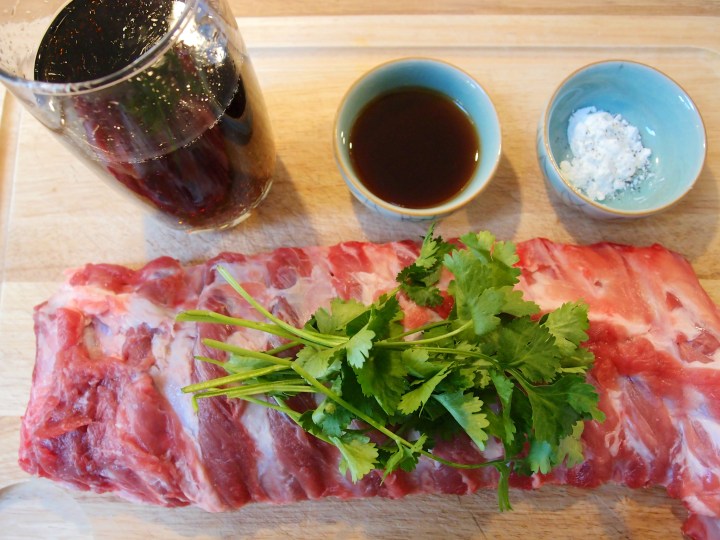
Cooking with cola is not that unusual – Nigella, for example, offers a ham in Coca-Cola recipe. The popular drink has also made its way into Chinese home cooking, and instead of using the oven, the ribs are all cooked in a pan. Coca-Cola’s flavourings include vanilla and coriander, which are both enhanced in this recipe.

The prep time is around 5 minutes, but you do have to leave the meat marinading for some time, ideally overnight, so it’s a dish you can prepare in advance. We’ll need to let the ribs simmer on the hob for around 45 minutes as well.

Cola_Ribs

Ingredients
1 rack of ribs
1 tbsp of light soy sauce
1 tbsp of dark soy sauce
1 tbsp of Chinese Shaoxing rice wine
1 tbsp of corn flour
A pinch of ground vanilla (optional)
250ml of Coca-Cola
A handful of coriander

Continue reading “Cola ribs the Chinese way – a simple recipe”

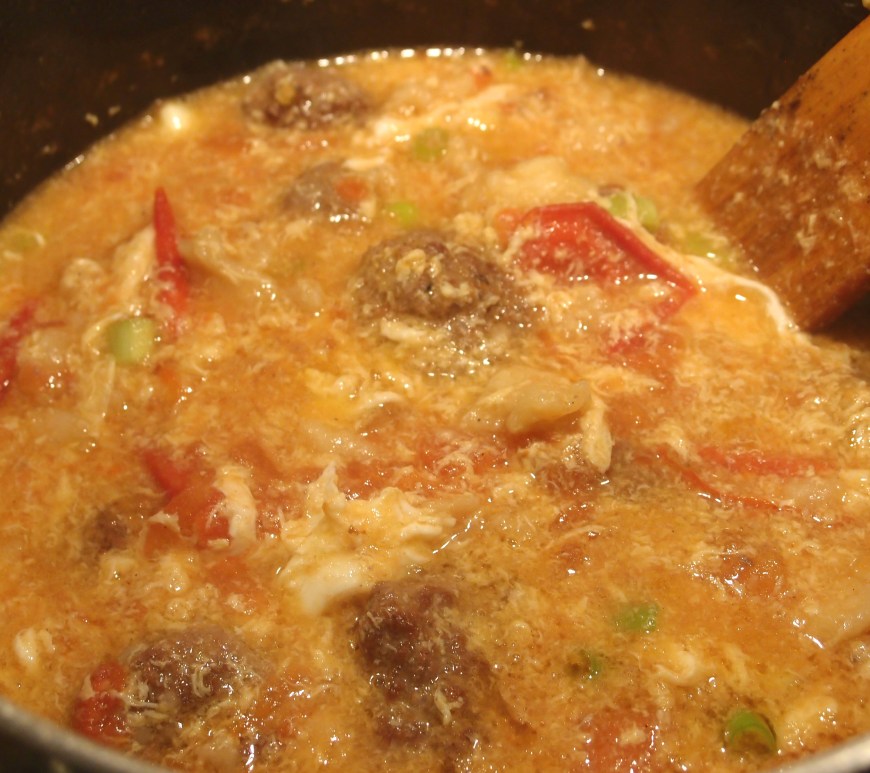
Dough_Knot_Soup

Dough Drop Knot Egg and Tomato Soup – Chinese Gnocchi

When you think of Chinese food, rice usually comes to mind, but actually flour-based recipes are just as common in the north. This dough drop soup is a home-cooked staple from the north of China as it looks more filling than it is, and it’s really easy to make, so became popular in the Sixties, when food was scarce. You don’t have to worry about making the dough drops even or pretty, because the whole point is that they are supposed to look lumpy and uneven – part of the handmade charm. Continue reading “Dough Drop Knot Egg and Tomato Soup – Chinese Gnocchi”

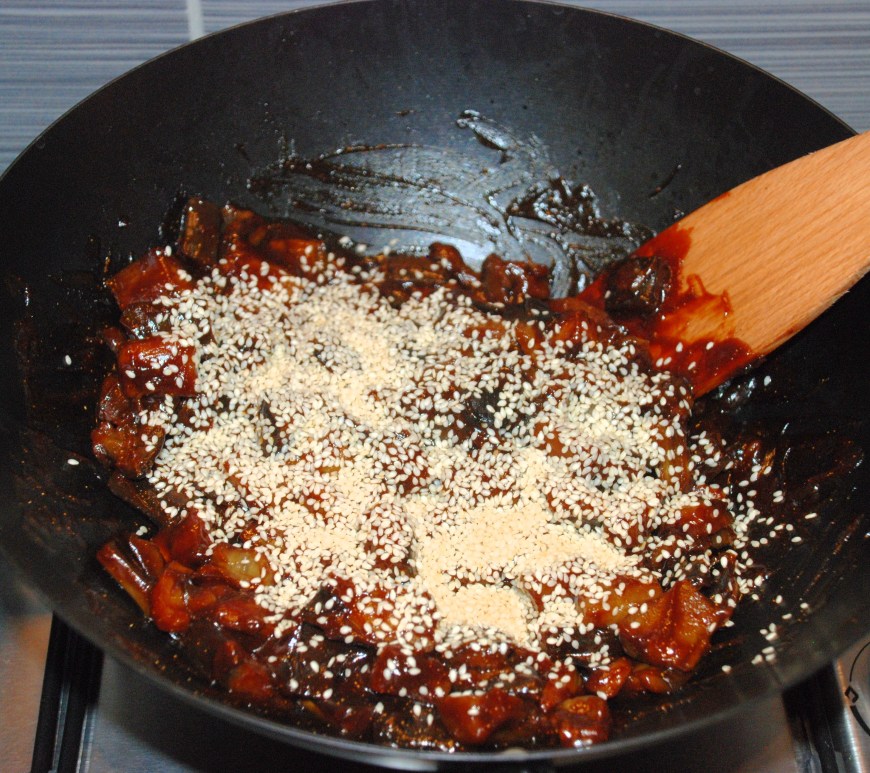
First Time Making: Miso Aubergines

I often have lunch at a small Japanese restaurant on Brewer Street called Kulu Kulu. In one of their colourful bowls, they serve this delicious aubergine dish. I like it so much that even after the first bowl, every time another one comes around on the conveyer belt, it’s so tempting to go for seconds! This vegan friendly dish is rather simple, but getting the right combination of flavours is not as simple (I learned the hard way) as it seems. I will try and share the learnings gleaned from my first attempt, for which I took inspiration from this Japan Centre recipe. Continue reading “First Time Making: Miso Aubergines”

Sardinian Pasta (Malloreddus) with Asparagus and Sea Urchins

During the Easter break, I went to visit my father who at the moment works in Belgium. Even though he works around the world, he always brings with him a stock of Italian ingredients so he can cook his favourite Sardinian food wherever he is. To make this recipe, he used canned sea urchins, which you don’t find so easily in London. Continue reading “Sardinian Pasta (Malloreddus) with Asparagus and Sea Urchins”

Sweet_corn_salted_egg_snack

Sweet corn and salted egg yolk – a golden Chinese snack recipe

Happy St Patrick’s day! In celebration this week, here’s a simple sweet corn snack that’d go well with a beer or two. A name for this Chinese snack means “a granary full of golden grains” (jin gu man cang), but it’s much more straightforward than it sounds: these are fried sweet corn kernels topped with salted egg yolks. There’s no need to add any other spices or flavours to it: the natural sweetness of the sweet corn balances perfectly with the salted eggs.

You can keep the egg whites to use in other recipes. For example, they can be mixed with minced pork.

This is very easy to make, and only takes around 10 minutes. The portions below serve two. If you are using frozen sweet corn, then please defrost it beforehand! Also, I’m using whole wheat flour in this version of the recipe, so the colour is a bit darker.

Sweet_corn_salted_egg_snack

Ingredients
1.5-2 cups of sweet corn kernels
3-4 tbsps of plain flour
2 salted egg yolks

You’ll also need some water and plenty of oil for frying.

Continue reading “Sweet corn and salted egg yolk – a golden Chinese snack recipe”

Madrid: a culinary city break

When I told friends that the city break in Madrid was quite a culinary one, they said that, well, every time I go on holiday it ends up being a culinary trip! But what better than food to tell you the story of the place you are visiting? Out of all the curiosities travelling might trigger, this one is undoubtedly the most satisfying. Knowing what people eat is like entering into their everyday life, inside their habits, their most familiar thoughts. At Blender and Basil we represent two of the most traditional cuisines in the world, where eating is so important that every life event is discussed or celebrated around the table: decisions and compromises, promises and arguments, hellos and good byes. In Spain, too, it goes just like that, so I did my best to taste some of the most traditional dishes in the country.

La Daniela

Can you have a whole banquet inside a croqueta? At La Daniela I learned you can. We visited this wonderful restaurant at our arrival in Madrid and on an empty stomach. Once sat at the bar and chatting away with the most pleasant waiter, we definitely got carried away with the orders. Croquetas de Cocido, Croquetas de Jamon, Callos (tripe), Salmorejo soup with aubergines, Russian salad and, on the house, Ropa Vieja (another Cocido derivate dish). The highlights of our quite extensive menu were definitely the Croquetas de Cocido and Callos. Both rich on the palate and heavy on the stomach, these dishes are very representative of the city. The former, a derivate dish of the cocido madrileño, in croquetas the heart of all cocido tastes mixed with beshamel sauce. The latter can be a tricky one to get right, as tripes are very fat: but this one had just the right mixture of elements to make it irresistible. Just like their personelle, who made us feel at home and let us stay a little later after closing time to chat away and finish our vino.

Continue reading “Madrid: a culinary city break”

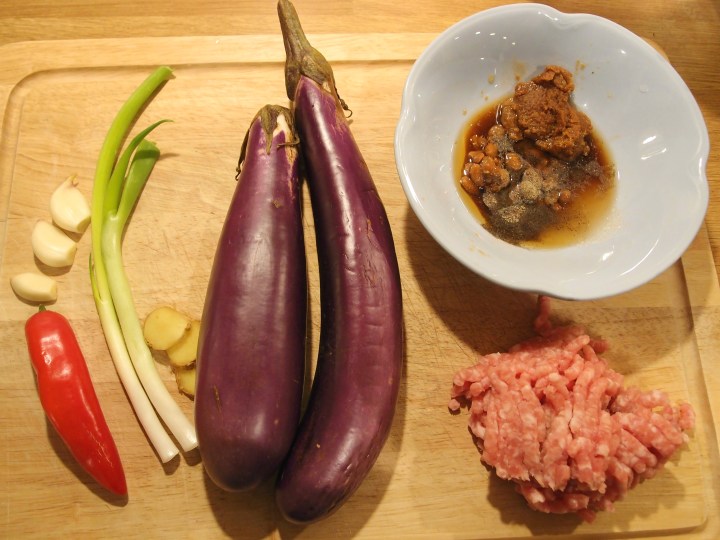
Aubergine_Meat_Sauce

Aubergine in soya bean and meat sauce (Jiang Qie Zi) – a traditional Chinese recipe

The most well-know Chinese aubergine (or eggplant) recipe is probably the sichuan-styled braised aubergine (yu xiang qie zi), but it’s not the only traditional recipe out there. This version with soya bean sauce (Chinese miso) is a common home-cooked dish from the north. The meat is optional, but does help to add a bit of flavouring.

Visually, we are trying to preserve the look of “unbroken”, whole aubergines, so ideally the type of aubergine used should be the thin, long Asian types instead of the . You can also use baby aubergines.

The cooking and prep time is around 15-20 mins, and we are using the microwave with this recipe (I don’t think it affects the taste, and means that it’s easier to preserve the look of the aubergine). This serves 2.

Aubergine_Meat_Sauce

Ingredients
2 narrow aubergines
3 cloves of garlic
3 slices of ginger
1-2 spring onions
1 chilli
1 tbsp of soya bean paste – huang jiang
1 tbsp of fermented soya beans (optional)
1 tsp of soya sauce
1 tsp of Shaoxing rice wine
1 tsp of sesame oil
Pinch of black pepper
Pinch of sugar
Pinch of salt
75-100g of minced pork

Continue reading “Aubergine in soya bean and meat sauce (Jiang Qie Zi) – a traditional Chinese recipe”

yellow_split_pea_cake_wan_dou_huang

Split yellow pea cake (wan dou huang) – a simple Chinese dessert recipe

Pulses such as split peas and lentils are a great source of iron, and if you get bored of cooking with them for savoury dishes, then you can try out this traditional Beijing snack, made with mostly just yellow split peas (and some sugar). It’s very much a spring snack, and is eaten before the third of the third lunar month, which is 9th April this year.

The cooking time is quite long, but mostly it just needs to be left to simmer on the stove – there is very little prep needed. This recipe makes a large batch that’d last a few weeks. You can downscale and make a smaller batch to start off with.

yellow_split_pea_cake_wan_dou_huang

Ingredients
1kg of split yellow peas
6 dried jujubes 

300g of sugar

You’ll also need water and a tiny dash of oil.

Continue reading “Split yellow pea cake (wan dou huang) – a simple Chinese dessert recipe”