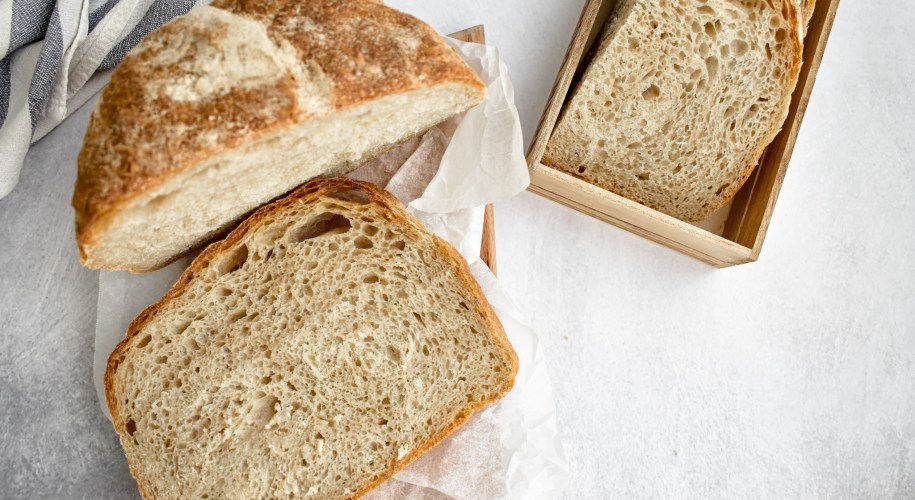


Twice Cooked Pork Belly Carrot and Coriander
Want a bit more bite to your pork belly? Then twice-cooking it might be the answer – as covering it in an egg and flour batter will make the texture a little crispier.
After the first round of frying, the pork belly is drained of oil on some tempura paper, ideally, to make it all less greasy, before you add in the spiralised carrots and coriander.
The whole thing is very fast and easy to cook, and prep only takes roughly 10 minutes, with around the same amount of cooking time. Continue reading “Twice Cooked Pork Belly Carrot and Coriander”


Koushui Ji – a Spicy Sichuan Chinese Chicken Salad
For something a bit different from your standard chicken salad this summer, there’s always the spicy sichuan koushui ji, which is also very easy to make. You can use either one whole chicken, or, as I’ve done here, use only chicken thighs. I’ve also used boneless pieces in this recipe, as I find it easier to eat.
You can make this the night before and store it in the fridge – after all, it’s supposed to be eaten cold – and prep time is minimal, while cooking time is roughly 30 minutes. It really is very simple, despite the long list of ingredients.
Continue reading “Koushui Ji – a Spicy Sichuan Chinese Chicken Salad”

Persian Flatbreads
One of the best memories I have of my travels around Iran is buying bread in the morning, which was our breakfast meal with some fresh cheese and dates. We would get each ingredient from different vendors in the market and eat in one of the amazing squares. In each city we found different styles of bread, but it’s usually flat and cooked in a tandoor oven. Of course, reproducing a tandoor oven at home is not really possible, so the best way you can cook this flatbread is on a hot non-stick frying pan. This simple recipe, taken from the stunning book Saffron Tales, is not only an exotic exploration from the usual ways of making bread, but also a great solution for those midweek evenings when you don’t really have the time to go through the whole bread making process. Makes 16 flat breads, which must be consumed on the spot, so reduce your ingredients if you need less.

Argentinian Pasta: Sorrentinos
When I spent almost two months in Buenos Aires, I have to confess that, if I came across sorrentinos in one of my many meals at Café La Poesia in San Telmo, I didn’t give them too much thought back then. They look like large, round ravioli and often carry similar fillings. Considering that the majority of Argentinians are of Italian origin, the name of this dish could have come from an old recipe of Campanian ravioli, maybe made particularly well by a nonna from Sorrento? However, these round cousins of ravioli actually have their origin in Argentina, and legend says that they used to be served at a restaurant in Mar de la Plata called Sorrento- hence the name. Whilst in Spain I was lucky enough to assist with the preparation of a very original sorrentinos recipe, made with a filling of ricotta, spinach, mushrooms and walnuts. Obviously, I documented it all for you, as well as making sure I tasted them!
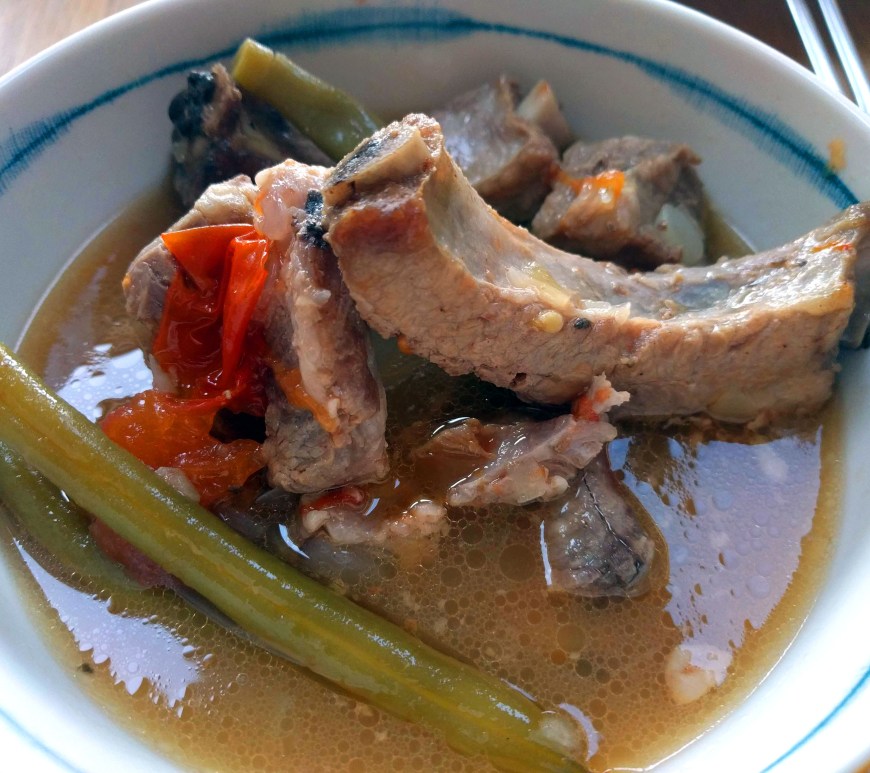
Sinigang soup from Knorr Mix – a Filipino Sour Soup
Having a sour soup can be very refreshing for the summer, and you will find the Knorr Sinigang Mix from most Asian supermarkets. The sourness comes from tamarind, and other essential ingredients include tomatoes, a meat of some sort and, often, green beans. In this version of the recipe using the Knorr Mix, we are going to use pork ribs, and to make them extra tender, we’ve included cooking it with an electric pressure cooker. Continue reading “Sinigang soup from Knorr Mix – a Filipino Sour Soup”
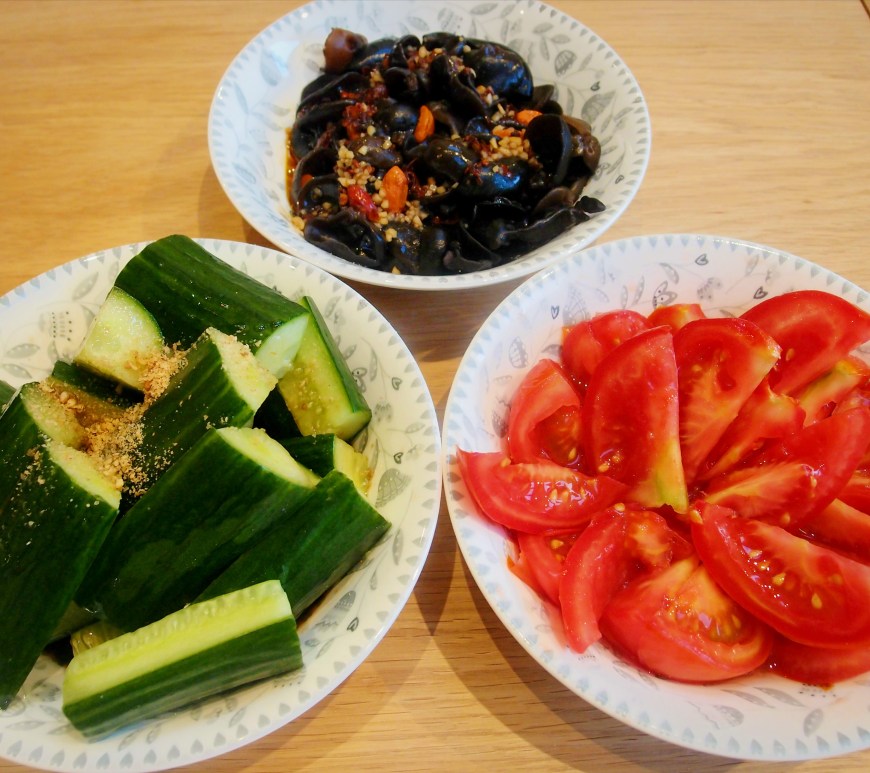
Three Chinese Summer Cold Dishes – Tomato Cucumber and Wood Ears
When you think of summer food, salad usually comes to mind (got to love a good summer salad). They are, actually, just as common in Chinese cooking, although instead of having a mix of different leaves, Chinese veggie cold dishes are usually made from a single ingredient. These are all very easy to make, so here are three salads with different flavours! They can all be prepared in advance and left in the fridge for dinnertime – no need worry about wilting leaves. Continue reading “Three Chinese Summer Cold Dishes – Tomato Cucumber and Wood Ears”

Courgette Pancakes – a Hu Ta Zi Recipe from Beijing
Summer has brought courgette spaghetti/noodles onto the shelves in some supermarkets here, so yes, this is another courgette recipe! If you can’t buy courgette spaghetti, then just spiralise a normal courgette.
Hu Ta Zi is a snack from Beijing, and is originally made with calabash (bottle gourd), but as that’s difficult to buy in many countries, I’ve adapted the recipe using courgette, and it’s just as delicious! The pancakes is best served hot, and usually dipped in a rice vinegar, soy sauce and garlic powder/chopped garlic sauce. However, they are also delicious by themselves. Continue reading “Courgette Pancakes – a Hu Ta Zi Recipe from Beijing”
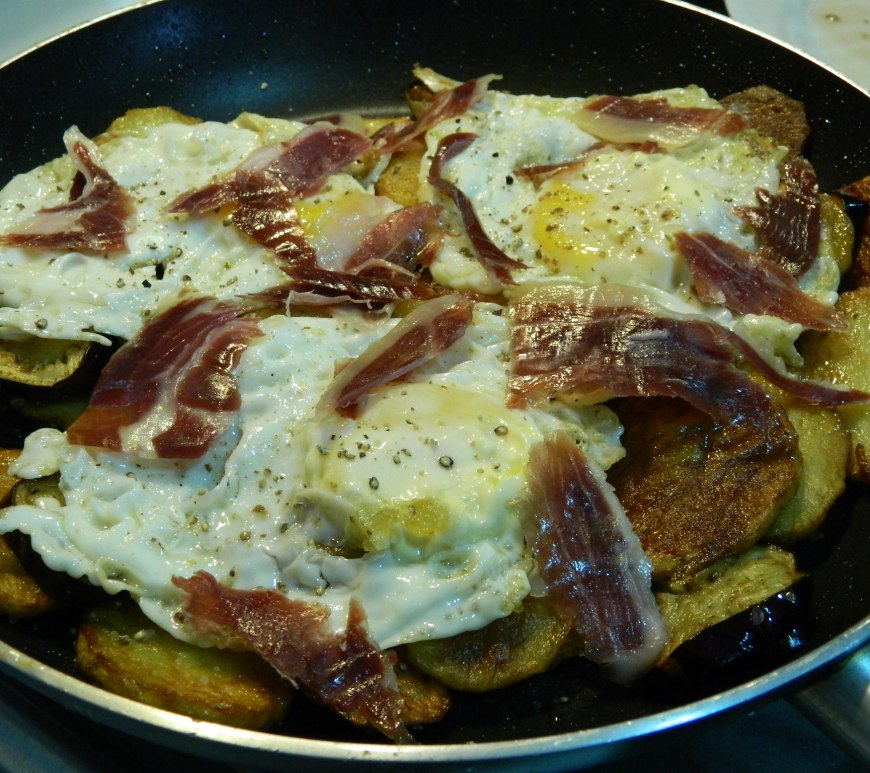
Homemade Fries with Egg on Top
Very few meals are as simple as fried eggs. Anyone can make them in a matter of minutes, perfect for those midweek express meals. Sure as eggs, you would probably have a few ingredients at home to make your meal more special: potatoes, for example. Forget those frozen fries you find at the supermarket, I’m talking about those potatoes you forgot in the cupboard for a week already. We are going to turn those into homemade fries. Continue reading “Homemade Fries with Egg on Top”

Tofu and Chinese Cabbage
Just home from a trip to Kyoto, the city of tofu, I’ve been thinking more about easy home-cooking tofu recipes, and this tofu and Chinese cabbage combo is a typical one to make at home. It’s not quite a completely stir-fry recipe, so I haven’t called it as such. You will need to drop the tofu and the cabbage leaves into boiling water to remove the slightly odd taste that tofu sometimes has when you just unwrap it, and will need to wilt the cabbage a little so that you don’t need to stir vigorously once it’s in the oil pan – so as not to break the tofu apart. Continue reading “Tofu and Chinese Cabbage”
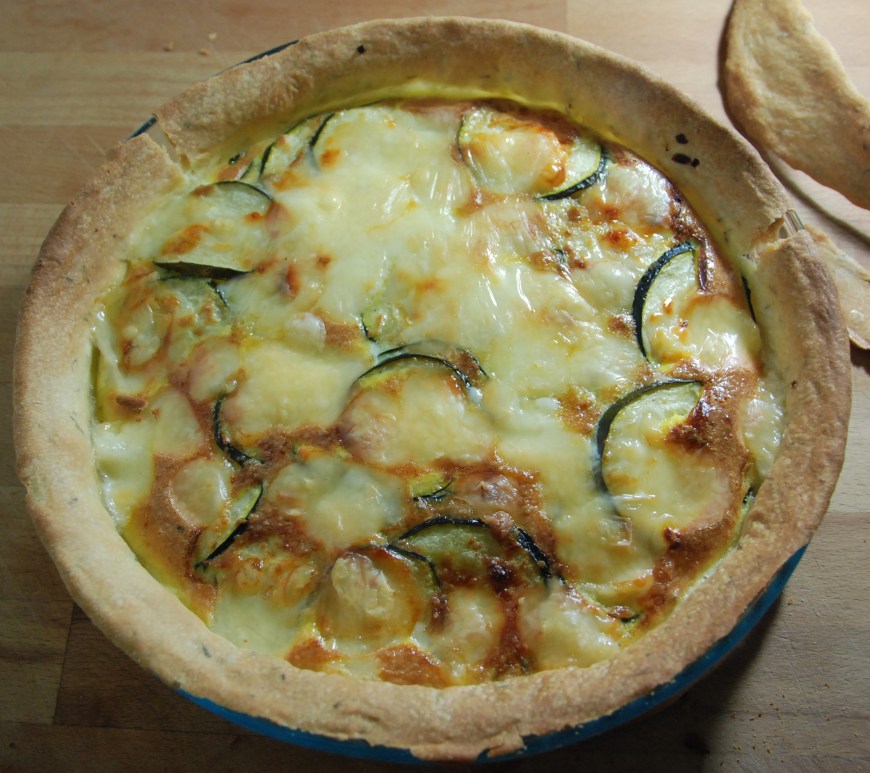
Savoury Courgette Tart
I don’t call this recipe a quiche because the method used for the Italian torta salata is slightly different. For these sort of homemade savoury tarts, Italians don’t add eggs to the short crust pastry, unlike the French. Also, a quiche will require the mixture of creme fraiche with the egg inside the filling, while in torta salata we use cheese (usually ricotta or chewy cheese like mozzarella or sweet provola) as the main ingredient that brings the flavours together. Admittedly, I had never made a torta salata before, and I was a bit disappointed with the results of this recipe, inspired by this one on Giallo Zafferano. I felt that the pastry should have been blind baked before adding the ingredients, as the bottom of my tart stayed very white, even if the top crust was well cooked. It was crispy and had a nice texture, but I decided not to use pancetta, so that my vegetarian friends could also eat it. This made the flavours a little bland, because I didn’t think to use a stronger flavoured cheese to make up for it.
Overall, I suggest you blind bake, and if like me you want this recipe to be vegetarian, choose a type of cheese that will bring out the flavours rather than making them shy away.
 Blender & Basil